
Jun — The Living Brew
There is something sacred about fermentation.
Across cultures and centuries — Christian and non-Christian alike — people have trusted invisible work. Yeast, bacteria, time, and patience transforming what we offer into something sustaining.
Jun is one of those quiet miracles.
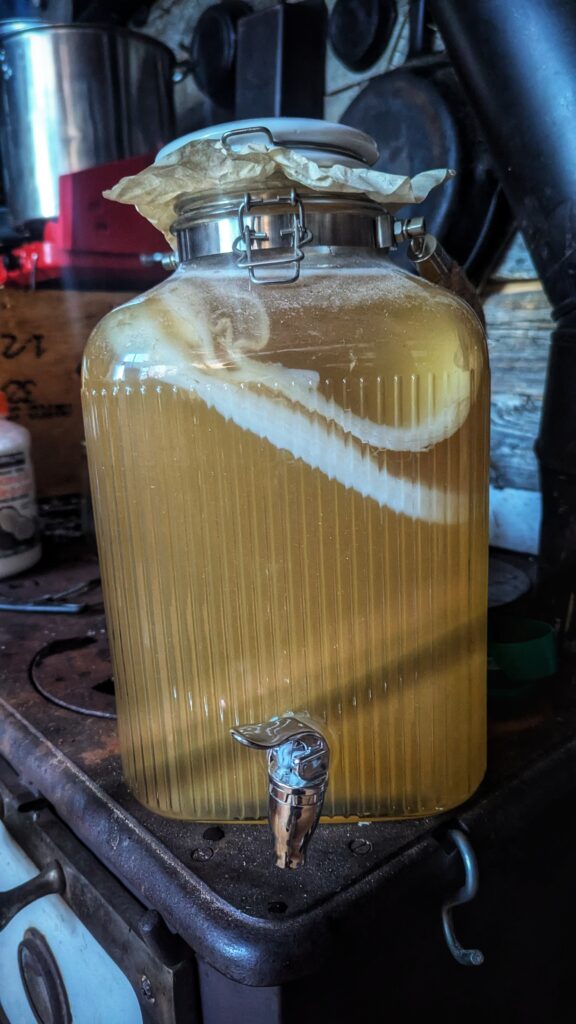
Often compared to kombucha, Jun is sometimes called the champagne of fermented tea. It’s lighter, faster, gentler — traditionally brewed with green tea and raw honey, and sustained by a living culture known as a Jun SCOBY.
It is alive.
And like all living things, it teaches attentiveness.
Life sustains life. Even here.
What Is Jun, and Why Use It?
Jun is a probiotic fermented tea known for:
- Supporting gut health and digestion
- Providing enzymes and organic acids
- Supporting immune function
- Being gentler and lower-acid than kombucha
- Offering a mild natural effervescence
Where kombucha can feel sharp or aggressive, Jun is often described as soft, bright, and uplifting.
It has been used not only as a beverage, but as:
- A base for fruit sodas
- A starter for vinegars
- A leavening boost for bread
- A daily tonic for vitality
Basic Jun Feeding & Maintenance
Jun thrives on consistency, not perfection.
Jun Feeding Recipe (Primary Brew)
Ingredients:
- 1 quart (1 L) non-chlorinated water
- 1 tablespoon raw honey
- 1 teaspoon green tea (or 1 green tea bag)
- 1 Jun SCOBY + a bit of starter liquid
Method:
- Brew green tea in hot water, then cool completely.
- Stir in honey until dissolved.
- Pour into a glass jar.
- Add SCOBY and starter liquid.
- Cover with breathable cloth and ferment 3–5 days at room temperature.
Taste daily. Jun ferments quickly — trust your senses.
Share the Blessing!
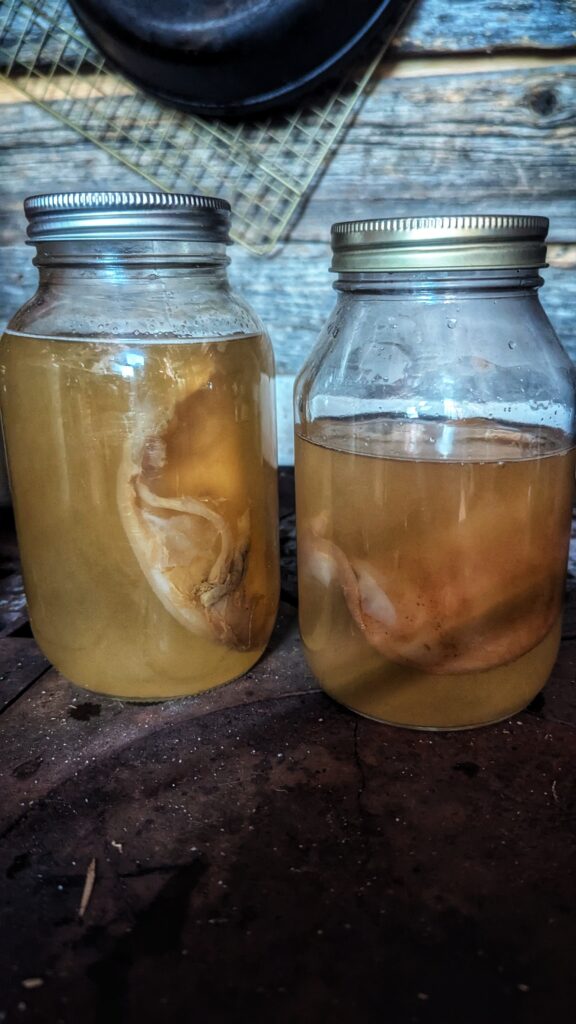
When the Scoby grows and doubles in size you will see multiple layers on top of each other. You can simply take one of those layers and a little bit of the fermented tea and add it to a new jar to give to a friend!
Use #1: Jun Soda (Plain or Fruit-Infused)
Straight Jun Soda
- Bottle finished Jun
- Seal tightly
- Leave at room temp 1–2 days
- Refrigerate when lightly carbonated
Fruit Jun Soda
Add before bottling:
- Crushed berries
- Apple slices
- Ginger
- Citrus peel
Burp bottles daily to prevent pressure buildup.
This soda is alive — it rewards attention.
Use #2: Jun Vinegar (Salads & Kitchen Use)
Left unattended, Jun becomes something else entirely — vinegar.
Simple Jun Vinegar
- Allow Jun to ferment 2–4 weeks uncovered
- Taste until tangy and sharp
- Strain and bottle
Uses:
- Salad dressings
- Marinades
- Digestive tonic (diluted)
- Cleaning solutions
Nature finishes what we begin.
Use #3: Jun Sludge Bread (Nothing Wasted)
At the bottom of every Jun jar is a cloudy sediment — yeast, bacteria, and spent culture.
This is not waste. It is leaven.
Simple Jun Bread Recipe
Ingredients:
- 2 cups flour
- ½ cup Jun sludge
- ½ tsp salt
- ½ cup warm water (as needed)
Method:
- Mix all ingredients into a sticky dough.
- Let rise overnight (8–12 hours).
- Shape and bake at 425°F (220°C) for 25–30 minutes.
The bread is rustic, tangy, and deeply nourishing.
Troubleshooting Jun
- Too sour too fast: Ferment shorter; lower temperature
- Weak fermentation: Add a little more honey or starter
- Off smells: Discard and start fresh — discernment matters
- Mold: Do not scrape. Compost it. Begin again
Jun teaches humility. You don’t dominate it — you collaborate.
A Final Reflection
Jun is more than a drink.
It is a lesson in stewardship, patience, and trust — shared across belief systems and cultures, yet fully qcompatible with faith.
We tend what we’ve been given.
We wait.
And something living meets us halfway.
“I planted, Apollos watered; but God gave the increase.”
— 1 Corinthians 3:6 (KJV)
Fermentation is faith made visible.